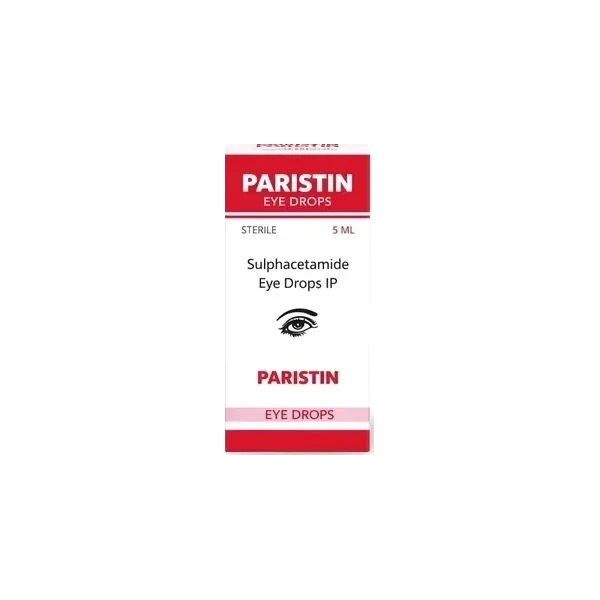
1. Description of Paristin
Paristin Eye Drop is an ophthalmic anti-infective medication used to treat bacterial eye infections, particularly surface-level conditions such as bacterial Conjunctivitis. Its active ingredient is Sulphacetamide 20% w/v, a Sulfonamide antibiotic.
This ophthalmic antibiotic solution works directly on the eye to prevent bacteria from multiplying, helping the infection clear up and relieving symptoms such as redness, discharge, and stinging or irritation.
Biomedica International manufactures Paristin Eye Drop, available in a 10 ml bottle. The active salt, Sulphacetamide, is FDA-approved. Paristin is produced in a GMP-compliant facility and meets WHO-approved quality standards, ensuring reliability and safety for users.
Sulphacetamide works by blocking a key step in bacterial folic acid production. Folic acid (vitamin B9) is a nutrient that bacteria need to grow and survive. When this process is blocked, bacteria cannot multiply. This prevents the infection from worsening and allows the eye to recover. This is what makes Paristin an effective treatment for surface-level bacterial eye infections.
The primary uses of the Paristin Eye Drop include treating bacterial Conjunctivitis (commonly known as Pink eye), Blepharitis, and other superficial bacterial eye infections. Always consult an ophthalmologist before starting this medication to confirm that the infection is bacterial.
Store this medicine at room temperature (68°F to 77°F / 20°C to 25°C), protected from light, and do not freeze it. Keep it out of the reach of children, and do not use it after the expiry date on the label.
Paristin Eye Drop treats bacterial eye infections, such as Conjunctivitis, Blepharitis, and other superficial infections. Its active ingredient, Sulphacetamide 20%, inhibits bacterial growth, helping relieve symptoms such as redness, discharge, and irritation in the affected eye.
2. How Paristin Works
Paristin works by preventing bacteria from making essential proteins, slowing their growth and helping clear the infection. It is an effective medication for bacterial eye infections and eases symptoms.
Paristin Eye Drop delivers targeted antibiotic action directly to the site of infection. Its active salt, Sulphacetamide 20%, provides the following benefits:
- Treats bacterial Conjunctivitis (Pink eye): It clears the bacterial infection and reduces redness, swelling, and discharge, helping Pink eye symptoms resolve more quickly.
- Treats Blepharitis: It helps manage bacterial eyelid infections, reducing inflammation and discomfort along the eyelid margins.
- Eases stinging and irritation: It relieves eye stinging and irritation caused by bacterial infection in and around the eye.
- Broad-spectrum bacterial coverage: It works against common bacteria responsible for eye infections, including Staphylococcus aureus, Streptococcus pneumoniae, Haemophilus influenzae, and Escherichia coli.
Use this ophthalmic antibiotic solution as directed by an eye specialist. Here are general guidelines for using this medication:
- Instill 1 to 2 Sulphacetamide drops into the affected eye(s) every 2 to 3 hours during the day, with reduced frequency at night.
- Tilt the head back, pull down the lower eyelid, and instill the drops directly into the eye.
- Close the eye gently for 1 to 2 minutes after instillation.
- Do not touch the dropper tip to the eye or any surface to avoid contamination.
- Complete the full prescribed course, even if symptoms improve early.
The typical Paristin dosage is 1 to 2 drops instilled every 2 to 3 hours during the day, with reduced frequency at night. However, the exact Sulphacetamide 20% eye drop dosage depends on the severity of the infection. Always follow the doctor's specific instructions and complete the full treatment course.
Paristin Eye Drop works by blocking the bacterial protein-making process. Bacteria need these proteins to grow and survive. This is why it is useful as a Sulphacetamide eye drop for bacterial eye infections and related eye conditions.
3. Mechanism of Action
At the cellular and biochemical level, Sulphacetamide interacts selectively with specific physiological receptors and enzymatic pathways responsible for regulating targeted therapeutic pathways.
By modulating these targeted pathways, Paristin restores balanced physiological response without unnecessary systemic burden when taken at the physician-recommended dose.
4. Dosage and Administration of Paristin
4.1 Recommended Dosage
The standard medical recommendation for Paristin Eye Drop is tailored according to patient tolerance, therapeutic response, and clinical evaluation. Always adhere to professional healthcare provider recommendations to minimize adverse events.
4.2 How to Take
- Use strictly on the affected area or as directed by your ophthalmologist/physician.
- Wash and dry your hands thoroughly before and after each application.
- Avoid contact with eyes, mouth, or broken skin unless specifically formulated for ophthalmic use.
4.3 When to Take
Apply at evenly spaced intervals as prescribed on your medication label. Do not apply extra quantities to make up for a missed dose.
4.4 Who Can Use
✔ Suitable For:
- Adult patients diagnosed with conditions requiring Sulphacetamide.
- Individuals evaluated by a licensed healthcare provider for Eye Drop therapy.
- Patients with verified tolerance to the prescribed strength.
✖ Not Suitable For:
- Individuals with known hypersensitivity or allergy to Sulphacetamide.
- Patients taking contraindicated or interacting therapies without physician approval.
- Patients with unstable cardiovascular, severe hepatic, or renal conditions unless cleared by a specialist.
- Pediatric patients under 18 years unless explicitly prescribed.
5. Side Effects and Warnings
While Paristin is clinically evaluated and well-tolerated, systemic physiological responses may vary:
Like any medication, Sulphacetamide eye drops may cause some side effects. Most Paristin Eye Drop side effects are mild and temporary, and they often subside as the body adjusts to the medication. However, consult a healthcare professional if they persist or worsen:
- Eye irritation
- Stinging in the eyes
- Mild burning
- Temporary blurred vision after use
- Itching
- Redness
6. Precautions & Drug Interactions
Liver Disease
Paristin is generally considered safe in those with liver disease because no known liver-related interactions have been established for this ophthalmic use. It is still wise to consult a doctor if the person has a major liver condition or uses many medicines at the same time.
Kidney Impairment
There is no established kidney-related interaction for Paristin Eye Drop. Since it primarily acts on the eye, it does not typically worsen kidney problems. A doctor should still review treatment in people with kidney concerns.
Pregnant and Breastfeeding women
The safety of Sulphacetamide eye drops during pregnancy is not clearly established. Available information indicates it may be unsafe during pregnancy and should only be used after a doctor weighs the benefits and risks. Breastfeeding information is limited, so a doctor should guide use during nursing.
Avoid
Avoid Paristin Eye Drop if allergic to Sulphacetamide Sodium or other sulfonamide-class medications. Do not use with silver-containing eye preparations or local anesthetic eye drops, as they can reduce effectiveness. Do not wear contact lenses during treatment. Do not use if the solution has changed color or appears cloudy, as this may indicate contamination.
7. Storage and Handling
Store Paristin Eye Drop blister packs at controlled room temperature between 15°C to 30°C (59°F to 86°F). Keep protected from excessive heat, bathroom moisture, and direct sunlight. Retain in original factory packaging until consumption and keep strictly out of reach of children and pets.
8. Frequently Asked Questions (FAQs)
Q: What is the active ingredient in Paristin?
A: Paristin is formulated with Sulphacetamide as its active pharmaceutical ingredient and is manufactured in WHO-GMP certified pharmaceutical facilities.
Q: How should I store Paristin safely?
A: Keep the medicine in its original moisture-resistant blister pack at room temperature (15°C–30°C), away from direct sunlight and out of reach of children.
Q: Can I order Paristin with discreet international shipping?
A: Yes. MyEdKart ships all orders in plain, tamper-evident packaging with live tracking numbers provided upon dispatch.
Q: Is Paristin Eye Drop an antibiotic?
A: Yes, Paristin may be used as an antibiotic for Pink eye when the cause is bacterial. It contains Sulphacetamide, which stops bacterial growth. It does not work for viral Pink eye, so a doctor should confirm the cause before prescribing it.
Q: Can it help reduce eye redness when a bacterial eye infection is the cause?
A: Yes, it can help reduce eye redness when a bacterial eye infection is the cause. It is not a simple cosmetic redness drop. It treats the infection itself, so relief develops as the bacteria stop growing and the eye begins to recover.
Q: Is mild stinging or burning upon instillation a known and common side effect of Paristin Eye Drop?
A: Yes, mild stinging or burning upon instillation is a known and common side effect of Paristin Eye Drop. This is typically brief and temporary. It occurs because higher concentrations of Sulphacetamide can mildly irritate the eye surface. If stinging is severe or persistent, consult a healthcare professional promptly.
Q: Can I wear contact lenses while using Paristin Eye Drop?
A: No, avoid contact lenses during treatment. Lenses can increase irritation and may slow recovery. A person should wait until the infection clears and a doctor confirms it is safe to use lenses again.
Q: Is Paristin Eye Drop safe during pregnancy or breastfeeding?
A: No, Paristin Eye Drop is not recommended during pregnancy, especially near delivery, due to potential risks to the newborn. Breastfeeding women should use it only under a doctor's supervision. Always consult a doctor before use during pregnancy.