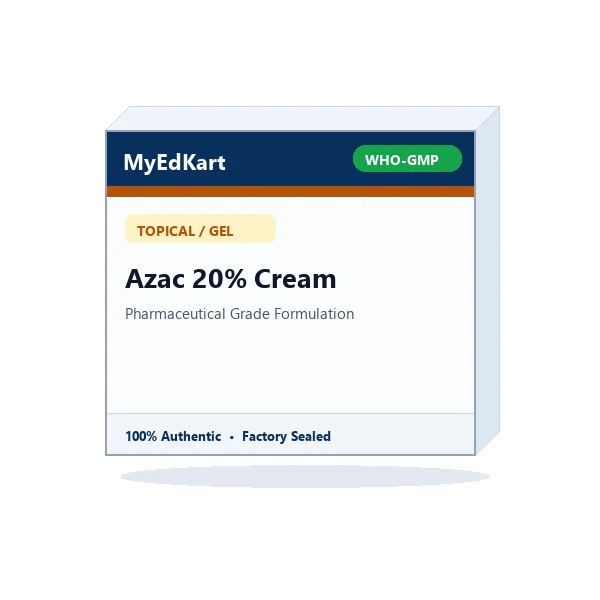
1. Description of Azac 20%
Azac Cream 20% is a topical medication primarily used for Acne. It contains Azelaic Acid (20% w/w) as an FDA-approved ingredient. Azelaic Acid belongs to the class of dicarboxylic acids. Mark (India) Cosmed Pvt. Ltd. manufactures Azac Cream in its GMP-compliant laboratories.
Azelaic Acid works by lowering the pH of skin cells and disrupting DNA synthesis in bacterial cells, thereby inhibiting bacterial growth. It also has anti-inflammatory, anti-keratinizing, and anti-melanogenesis properties. Azac Cream 20% uses include the reduction of blackheads, whiteheads, redness, pimples, and swelling. It is also prescribed for mild and moderate papulopustular Rosacea.
Azac Cream 20% is a prescription-only product, so use it exactly as your doctor directed. Generally, it is applied to clean, dry affected skin twice daily, preferably in the morning and evening. Users with sensitive skin can be advised to use it once daily at night for the first week. If you miss a dose, apply it as soon as you remember, but skip it if the next dose is near. If overapplied, gently rinse your face with clean water and consult a doctor if any unwanted effects occur.
Azac Cream 20% side effects include stinging, burning, irritation, dryness, or peeling at the application site. Seek medical care if these effects persist. Precautions include avoiding contact with broken skin, the eyes, and the mouth. Do not combine with other irritating skin products unless advised, and avoid using for Eczema.
Store in a cool, dry place, below 30°C, protected from direct sunlight and moisture. Keep out of reach of pets and children. Also, avoid applying expired cream.
2. How Azac 20% Works
Azac Cream is widely preferred for Acne treatment and to clear the skin from clogged pores. Key benefits are listed as follows:
- Anti-bacterial action: Inhibits the growth of Cutibacterium acnes and Staphylococcus epidermis to lower skin pH and control Acne.
- Anti-inflammatory action: Inhibits redness and swelling-inducing proteins to reduce inflammation and manage Rosacea.
- Anti-keratinizing property: Balances keratinization (shedding of dead skin cells) to prevent the formation of whiteheads and blackheads, thereby unclogging pores.
- Anti-melanogenesis property: It inhibits melanin-producing tyrosinase enzyme. As a result, it controls post-inflammatory hyperpigmentation.
Use Azac exactly as your doctor prescribes. If the whole face is affected, around 0.5 g of cream will be enough per application. General guidelines to use this cream are:
- First, wash and dry the affected area.
- Take a small amount of medication and apply a thin layer to the infected skin.
- Use once or twice a day, as prescribed.
- Wash your hands after use.
3. Mechanism of Action
At the cellular and biochemical level, Azelaic Acid interacts selectively with specific physiological receptors and enzymatic pathways responsible for regulating targeted therapeutic pathways.
By modulating these targeted pathways, Azac 20% restores balanced physiological response without unnecessary systemic burden when taken at the physician-recommended dose.
4. Dosage and Administration of Azac 20%
4.1 Recommended Dosage
The standard medical recommendation for Azac 20% Cream is tailored according to patient tolerance, therapeutic response, and clinical evaluation. Always adhere to professional healthcare provider recommendations to minimize adverse events.
4.2 How to Take
- Use strictly on the affected area or as directed by your ophthalmologist/physician.
- Wash and dry your hands thoroughly before and after each application.
- Avoid contact with eyes, mouth, or broken skin unless specifically formulated for ophthalmic use.
4.3 When to Take
Apply at evenly spaced intervals as prescribed on your medication label. Do not apply extra quantities to make up for a missed dose.
4.4 Who Can Use
✔ Suitable For:
- Adult patients diagnosed with conditions requiring Azelaic Acid.
- Individuals evaluated by a licensed healthcare provider for Acne & Skin Care therapy.
- Patients with verified tolerance to the prescribed strength.
✖ Not Suitable For:
- Individuals with known hypersensitivity or allergy to Azelaic Acid.
- Patients taking contraindicated or interacting therapies without physician approval.
- Patients with unstable cardiovascular, severe hepatic, or renal conditions unless cleared by a specialist.
- Pediatric patients under 18 years unless explicitly prescribed.
5. Side Effects and Warnings
While Azac 20% is clinically evaluated and well-tolerated, systemic physiological responses may vary:
Azelaic Acid 20% Cream can cause side effects in a few users. These effects will subside once the skin adjusts to the dose. But if they worsen or persist, inform your doctor. Common side effects observed at the application site are:
- Stinging
- Burning
- Irritation
- Dryness
- Peeling
Side effects of Azac Cream 20% include mild itching, burning, stinging, peeling, dryness, and irritation at the application site. These effects generally improve as your skin adjusts to the dose. Consult a doctor if these effects become severe, persist longer, or you notice changes in skin color.
6. Precautions & Drug Interactions
Liver Disease
Since Azac Cream 20% is used topically, it has a low systemic absorption. This is why it is typically unlikely to affect liver function when used as prescribed.
Kidney Impairment
Kidney-related interactions are not generally observed with topical use. However, as a safety measure, consult your doctor if you have a severe renal condition.
Pregnant and Breastfeeding women
Although topical use is usually considered low risk, it should be used only when prescribed, given limited human safety data.
Avoid
Avoid using it to treat Eczema or applying it to broken skin, the eyes, or the mouth. Also, do not combine Azac with other irritating skin products unless advised to do so.
7. Storage and Handling
Store Azac 20% Cream blister packs at controlled room temperature between 15°C to 30°C (59°F to 86°F). Keep protected from excessive heat, bathroom moisture, and direct sunlight. Retain in original factory packaging until consumption and keep strictly out of reach of children and pets.
8. Frequently Asked Questions (FAQs)
Q: What is the active ingredient in Azac 20%?
A: Azac 20% is formulated with Azelaic Acid as its active pharmaceutical ingredient and is manufactured in WHO-GMP certified pharmaceutical facilities.
Q: How should I store Azac 20% safely?
A: Keep the medicine in its original moisture-resistant blister pack at room temperature (15°C–30°C), away from direct sunlight and out of reach of children.
Q: Can I order Azac 20% with discreet international shipping?
A: Yes. MyEdKart ships all orders in plain, tamper-evident packaging with live tracking numbers provided upon dispatch.
Q: What important usage and safety guidance applies to Azac 20% Cream (Azelaic Acid)?
A: You should apply Azac Cream 20% on a dry, clean affected skin area as a thin layer. Use it exactly as the doctor advised, typically once or twice a day. Avoid the broken skin area, the mouth, and the eyes. Make sure to wash your hands before and after use.
Q: Is Azac Cream 20% effective for Acne treatment when used regularly as prescribed?
A: Yes, Azac Cream 20% is effective for Acne treatment when used regularly as prescribed. It contains Azelaic Acid, which helps control the growth of Acne-causing bacteria, reduce inflammation, and help remove whiteheads and blackheads. Visible improvement can take several weeks, so make sure to use it consistently.
Q: Can Azac 20% Cream cause permanent iris or eye color changes?
A: Yes, Azac Cream 20% can help remove or fade Acne marks, particularly dark spots and hyperpigmentation. Azelaic Acid can reduce excess melanin production and unclog pores, helping clear the skin. However, it doesn’t remove deep Acne scars. Use consistently with sunscreen to see a gradual improvement.
Q: Can I buy Azac 20% Cream over the counter without a prescription?
A: No, you can not buy 20% Azelaic Acid over the counter as it is a prescription-only treatment in most countries. 20% creams should always be used under medical guidance, particularly for sensitive skin, long-term Acne treatment, and persistent irritation.
Q: Is 20% Azelaic Acid considered too strong for most skin types because it is naturally well-tolerated?
A: No, 20% Azelaic Acid is not considered too strong for most skin types because it is naturally well-tolerated. However, it can still cause temporary dryness, irritation, or a burning sensation in some users. Therefore, use as directed by your healthcare provider and avoid harsh skincare products.
Q: Can I use 20% Azelaic Acid every day if your doctor has prescribed it and your skin can tolerate the dose?
A: Yes, you can use 20% Azelaic Acid every day if your doctor has prescribed it and your skin can tolerate the dose. It is intended for daily use, applied once or twice. However, if dryness, peeling, or burning occurs, your doctor can adjust the dosing frequency accordingly.